DiCaprio, Taylor, and Penn anchor a searing political thriller that marks a radical turning point for Anderson. PTA has crafted a film that is cinematically bold, morally unflinching, unshakably timely, and wholly original.
Paul Thomas Anderson doesnât just set fire to the past in One Battle After Another â he detonates it. Based on Thomas Pynchonâs Vineland and infused with the anxious dread of 2025 America, Andersonâs film is less a historical drama than a scream into the present. Itâs angry, reflective, funny, devastating. And at the center is Leonardo DiCaprio, reminding us he can still burn the screen down when the match is struck just right.
Anderson has always been fascinated by American mythology â the charlatans of The Master, the oil barons of There Will Be Blood, the pornographers of Boogie Nights. But One Battle After Another flips the mirror: here, he forces us to reckon not with ghosts of the past, but with our complicity in the present.
The result is a furious, sprawling, incendiary epic â one that confronts fascism, burnout, and the cost of resistance in a country hurtling toward collapse. If Licorice Pizza was a soft-focus memory, One Battle is the aftermath of waking up from that dream. And in doing so, it may well become Andersonâs most important film.

DiCaprio stars as Bob Ferguson, a demolition man turned revolutionary whoâs gone underground with his teenage daughter, Willa (played with steely resolve by breakout Chase Infiniti). Years earlier, Bob and the French 75 â a radical leftist group â were engaged in violent resistance: bombing ICE facilities, hijacking federal vans, freeing detainees. But time has passed. And now, Bob hides in plain sight, numbing himself with weed and memories as authoritarianism creeps ever closer.
But Anderson doesnât romanticize Bobâs activism â or his retreat. The film’s opening half blazes through a series of flashbacks with kinetic urgency: Teyana Taylorâs Perfidia Beverly Hills, a firebrand leader fighting for reproductive rights and Black liberation, leads protest raids while Sean Pennâs Col. Steven Lockjaw, a white supremacist military enforcer, becomes obsessed with her in a way that blends lust, loathing, and authoritarian guilt.

Perfidia and Lockjaw are locked in a twisted ideological and psychosexual duel. Anderson stages their interactions like battlefield encounters â chess moves masked as confrontations, debates weaponized into seductions. Taylorâs charisma is feral and mesmerizing. Penn, meanwhile, gives his most terrifying performance in decades, his face contorted into a sneer of hatred and longing. His Lockjaw is Andersonâs purest villain yet, and frighteningly plausible.
Whatâs bold is how One Battle After Another never lets Lockjaw become mythic. Heâs banal. Heâs a PTA dad with a fascist fetish. Heâs the smiling suburban executioner. And in Andersonâs world, thatâs scarier than any mustache-twirling strongman.
Soundtracks are sacred in Andersonâs cinema, and Jonny Greenwoodâs latest score may be his most radical departure yet. While Phantom Thread luxuriated in strings and There Will Be Blood seethed with minimalist dread, here Greenwood goes full jazz chaos â freeform drums echoing riot chants, dissonant piano thuds mirroring emotional collapse.

Then it quiets. Sparse melodies float through desert scenes like ghost signals. The silence in One Battle is deafening â used as punctuation for loss, horror, and, in rare cases, fleeting hope. Itâs not just underscore; itâs insurgent music. Greenwood isnât complementing Andersonâs vision â heâs challenging it.
Shot on 65mm VistaVision cameras and laced with thermal drone footage, the filmâs aesthetic is a contradiction in motion. Anderson finds beauty in the jagged â skateboarders gliding across rooftops with Molotovs strapped to their backs, desert encampments lit by solar panels and protest graffiti, refugee convoys moving like shadows across dry highways.
Thereâs a tactile sensibility here, reminiscent of Children of Men but grimmer. Nothing feels artificial. Even the brief sequences of action â including an ICE detention raid and a highway ambush â are less about thrills than visceral impact. Anderson doesnât want spectacle. He wants consequence.

And yet, itâs beautiful. The final 20 minutes unfold as a single, slow push through a wasteland. Smoke curls. Children dig in silence. A radio broadcasts the sound of a heartbeat. Anderson â ever the technician â resists closure. Heâs not interested in who wins. Heâs asking what remains.
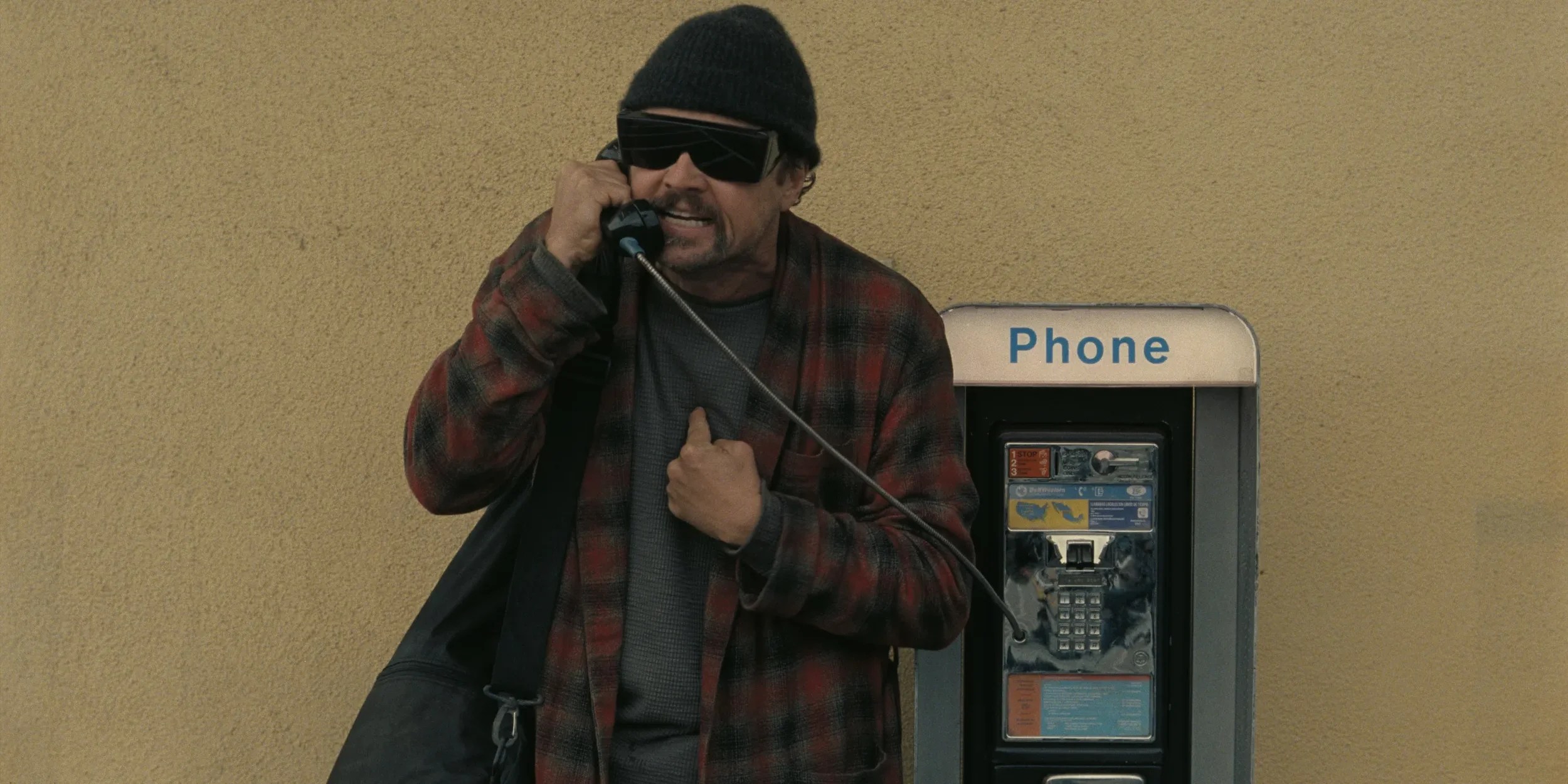
DiCaprioâs Bob veers between paranoia and parody â a freedom fighter with no fight left, shuffling through conspiracy forums in a bathrobe. In the second act, Anderson lets DiCaprio lean into Dude-like absurdism, and it nearly destabilizes the film. But just when it threatens to go slack, Lockjaw returns.
This choice â to let the film breathe, stumble, grieve â is what elevates it. Weâve seen Anderson flirt with political melancholy in Inherent Vice. But this time, he doesnât laugh it off. He lets it curdle. And then, finally, he dares to believe again.

Benicio Del Toroâs small-businessman-turned-underground-railroad-operator arrives late but delivers some of the filmâs most affecting moments. His network of ferrying undocumented families to safety â hidden inside UPS routes and funeral homes â is One Battleâs beating heart. Itâs a reminder: not all resistance is loud. Some of it is logistics. Some of it is mercy.
POPULAR ON THE CINEMA GROUP
Thereâs nothing subtle about the filmâs final chapter. But thatâs the point. In a media landscape addicted to neutrality, One Battle After Another dares to plant its flag. It is not bipartisan. It is not centrist. It is not interested in both-sidesing fascism.
What it is, is urgent. And urgent cinema is rare.
Anderson closes the film with a long tracking shot across scorched ground. A child, Willaâs age, picks up a book and walks toward the horizon. Jonny Greenwoodâs final cue is a heartbeat and a whisper. The last line â âTell them what we wantâ â could be cheesy. But it isnât.
Itâs a reminder. Stories are messages in bottles. And some bottles are Molotovs.
RATING: â â â â â
CREDITS
Release Date: Friday, September 26 In Theaters Nationwide
Production company: Ghoulardi Film Company
Distribution: Warner Bros. Pictures
Cast: Leonardo DiCaprio, Sean Penn, Chase Infiniti, Teyana Taylor, Benicio del Toro, Regina Hall
Director-screenwriter: Paul Thomas Anderson
Producers: Paul Thomas Anderson, Sara Murphy, Adam Somner
Runtime: 2 hours 42 minutes
Rated R
Watch The Trailer Below:
THE CINEMA GROUP
YOUR PREMIER SOURCE FOR THE LATEST IN FILM AND ENTERTAINMENT NEWS
FOLLOW US FOR MORE

window._taboola = window._taboola || [];
_taboola.push({
mode: ‘alternating-thumbnails-a’,
container: ‘taboola-below-article-thumbnails’,
placement: ‘Below Article Thumbnails’,
target_type: ‘mix’
});