Netflixâs new âLittle House on the Prairieâ honors the spirit of Laura Ingalls Wilderâs books with a sincere, beautifully cast and emotionally generous first season.
There is something quietly radical about a television series that is willing to be this earnest.
Netflixâs new âLittle House on the Prairieâ does not arrive with the cynicism, irony or prestige-TV severity that so often defines modern reboots. It is wholesome without being empty, sincere without being naive and old-fashioned without feeling trapped in amber. Developed by Rebecca Sonnenshine, the eight-episode first season returns to Laura Ingalls Wilderâs beloved world with clear affection for the source material, while also widening the lens enough to make the story feel more thoughtful for a contemporary audience.
The series begins with the Ingalls family leaving the Big Woods of Wisconsin for Independence, Kansas, where Charles âPaâ Ingalls, Caroline âMaâ Ingalls and their daughters Laura and Mary attempt to build a new life on the frontier. Laura, played by Alice Halsey, is spirited, impulsive and full of stories, a tomboy with a slingshot and a restless imagination. Mary, played by Skywalker Hughes, is more composed, bookish and beginning to notice the wider emotional world around her. Luke Bracey plays Charles with a grounded, steady warmth, while Crosby Fitzgerald gives Caroline a quiet strength that makes Ma feel less like an archetype and more like a woman trying to hold her family together through uncertainty.
What works best about this âLittle House on the Prairieâ is that it understands the appeal of the material without condescending to it. The show is full of familiar frontier hardships: harsh weather, illness, hunger, financial strain, isolation and danger at the edge of every open field. But it also understands the small pleasures that make this world endure: peppermint sticks, family rituals, fresh cornbread, sisterly arguments, a good dog, the promise of Christmas and the belief that decency can survive even when life is unforgiving.

The cast is the showâs greatest strength. Halsey is immediately compelling as Laura, capturing both her pluck and her insecurity without turning her into a polished little heroine. She is expressive, funny, stubborn and vulnerable in ways that make the character feel fully alive. Hughes is equally strong as Mary, especially in the way she plays a girl caught between childhood and early maturity. Their sisterly bond feels lived-in, full of affection and irritation, which is exactly what it needs to be.
Bracey is not trying to imitate Michael Landon, and the show is better for it. His Pa is noble but not overly mythic, a man whose love for his family is visible in the smallest exchanges. Fitzgerald has the more difficult role as Caroline, and she brings a welcome emotional restraint to Maâs resilience. Together, they make the Ingalls marriage feel like a partnership built on devotion, sacrifice and the understanding that survival on the frontier is never just physical.

The supporting ensemble adds warmth and texture to Independence. Jocko Sims brings dignity and depth to Dr. George Tann, while Barrett Doss gives store owner Emily Henderson an inviting spark. Warren Christie stands out as John Edwards, a gruff, wounded presence whose rough exterior hides something more soulful. Mary Holland adds comic sharpness as Jemma, a busybody with big ideas for the townâs future.
The reboot also makes a clear effort to broaden the world beyond the Ingalls family, most notably in its treatment of the Osage people whose land has been targeted for settlement. Laura forms a friendship with Good Eagle, played by Wren Zhawenim Gotts, while the series gives space to her parents, Mitchell and White Sun, played by Meegwun Fairbrother and Alyssa Wapanatâhk. The show does not turn into a revisionist frontier drama, and some viewers may wish it went further in exploring the realities of displacement, Manifest Destiny and the experience of Black and Indigenous characters in this period. Still, it is meaningful that the series acknowledges those histories rather than treating the frontier as empty land waiting to be claimed.
POPULAR ON THE CINEMA GROUP
That balance is where the show may draw predictable complaints from viewers resistant to any expansion of a classic text. But âLittle House on the Prairieâ does not diminish the Ingalls family by making the world around them more honest. If anything, it strengthens the story. The series keeps Laura, Mary, Ma and Pa at its center while allowing Independence to feel more like a real community, full of people with their own fears, histories and stakes.
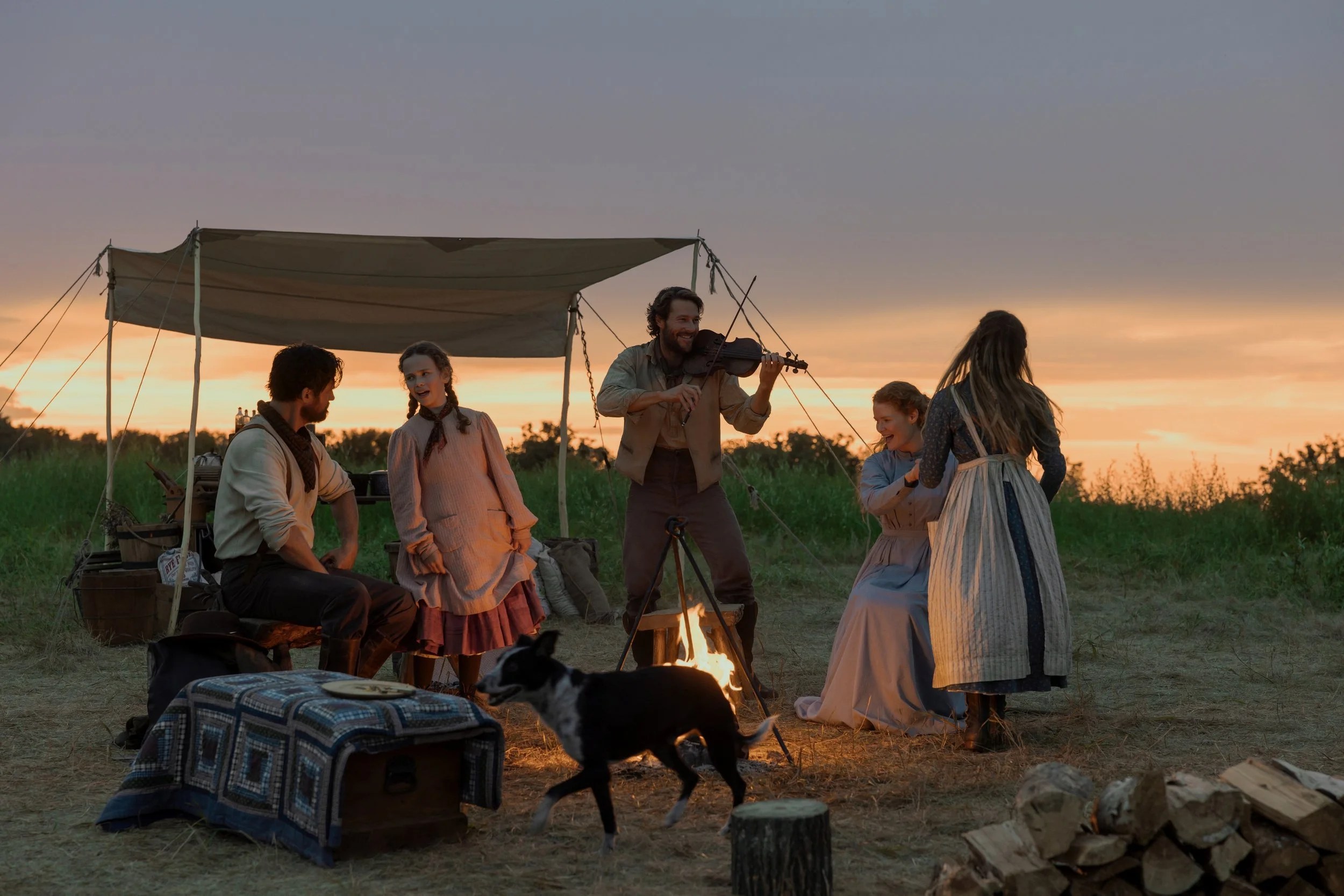
Visually, the show leans into a beautifully photographed vision of frontier life. Sunsets, fields, lantern light and weathered interiors give the season a storybook quality without making it feel artificial. The Winnipeg-shot production has a polished, glowing beauty, and Dan Romerâs score supports the emotion without overwhelming it. The series is designed to move viewers, and it often does, but it rarely feels manipulative.
The season is not perfect. Some middle episodes lag, and the show occasionally softens conflicts that might have benefited from more complexity. There are times when its wholesome instincts keep it from digging as deeply as it could into the harsher realities of the world it is depicting. But that restraint also feels tied to the showâs purpose. This is not a gritty deconstruction of âLittle House on the Prairie.â It is a family drama about courage, hardship, kindness and community.
What makes the reboot work is that it knows exactly what it wants to be. It is not embarrassed by its sentimentality. It is not trying to darken Laura Ingalls Wilderâs world beyond recognition. It is not chasing irony or reinvention for its own sake. Instead, it offers a respectful, heart-filled version of the story that feels accessible to new viewers while still carrying the emotional DNA of the books and the earlier television adaptation.
Netflix has already renewed âLittle House on the Prairieâ for a second season, and that feels like the right call. This first season may not fully realize every possibility in its expanded world, but it lays a sturdy foundation with warmth, care and an appealingly sincere ensemble. In a television landscape crowded with reboots that exist mostly as brand extensions, this one feels made with genuine affection.
âLittle House on the Prairieâ does not need to be cool. Its strength is that it never tries to be. It simply believes in family, kindness, perseverance and the idea that a story told honestly can still feel new.
RATING: â â â â â
CREDITS
Release Date: July 9, 2026
Cast: Alice Halsey, Luke Bracey, Crosby Fitzgerald, Skywalker Hughes, Jocko Sims, Warren Christie, Wren Zhawenim Gotts, Barrett Doss, Mary Holland, Meegwun Fairbrother, Alyssa Wapanatâhk
Creator: Rebecca Sonnenshine
Based On: The âLittle House on the Prairieâ books by Laura Ingalls Wilder
Streaming: Netflix
Episodes: 8 Episodes
Watch The trailer Below:

| FEATURES | INTERVIEWS | REVIEWS | The Catalogue | TRENDING | TRAILERS | VIDEOS |
THE CINEMA GROUP
YOUR PREMIER SOURCE FOR THE LATEST IN FILM AND ENTERTAINMENT NEWS
FOLLOW US FOR MORE
window._taboola = window._taboola || [];
_taboola.push({
mode: ‘alternating-thumbnails-a’,
container: ‘taboola-below-article-thumbnails’,
placement: ‘Below Article Thumbnails’,
target_type: ‘mix’
});