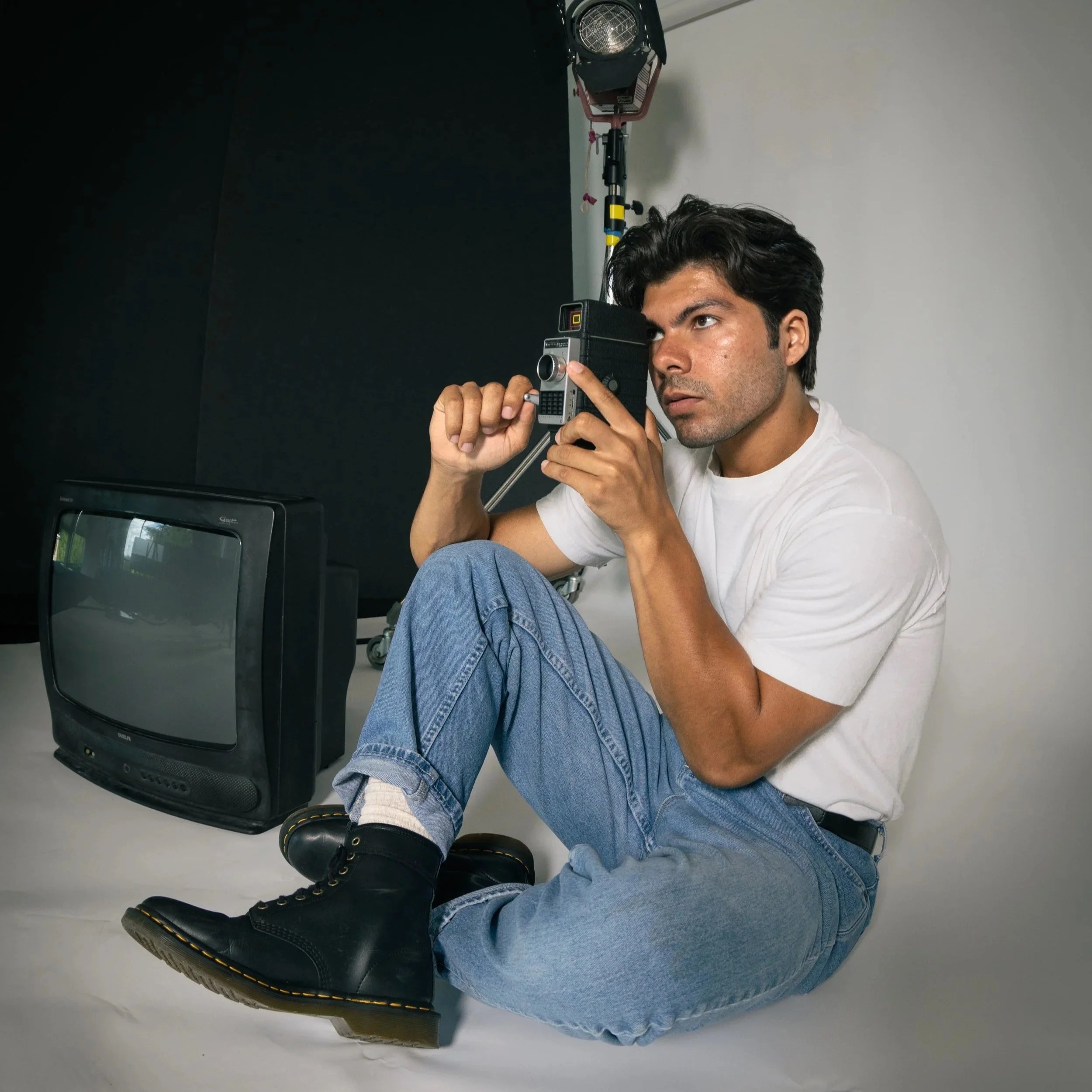
A viral Spider-Man fan film is rewriting what independent filmmaking can look like â not for profit, but for purpose.
In a media landscape dominated by billion-dollar franchises, Spider-Man: Alone feels almost impossible. A self-funded, non-profit fan film from Atlanta that has already captured millions of hearts and more than three million views on YouTube â all without a studio, a marketing team, or a single frame of spectacle. What began as one manâs tribute to his childhood hero has grown into something far larger: a movement about faith, survival, and the power of community.
At the center of it all is Benett Sullivan, a filmmaker, cancer survivor, and founder of Golden Century Films. His vision for Spider-Man: Alone is both deeply personal and quietly radical â a love letter to the character who helped him endure illness and isolation, and a challenge to the entertainment industryâs model of creativity as commerce. Through a hybrid nonprofit structure and a call for audience collaboration, Sullivan isnât just telling a Spider-Man story. Heâs rebuilding what it means to make one.
I. The Opening Scene
When the Spider-Man: Alone teaser dropped online, it didnât just circulate â it exploded. Within days, the footage shot by a small Atlanta-based production team reached over three million views and became the most talked-about fan film on YouTube. Viewers werenât just watching; they were feeling something. The trailerâs tone â moody, cinematic, emotionally charged â signaled not another cosplay project but something bigger, more grounded, and oddly spiritual.
Writer-director Benett Sullivan, the force behind the project, calls it a âlove letterâ to Spider-Man. But thatâs only part of it. The film has become a grassroots experiment in what modern fandom can be when you fuse purpose with artistry. âThis is about giving art utility,â Sullivan tells me. âIf Iâm telling a hero story, itâs my responsibility to empower people to be heroes in the real world.â
That sense of responsibility â both moral and creative â anchors Spider-Man: Alone. The project, still in pre-production, is being built as a nonprofit venture under Sullivanâs company, Golden Century Films, with a fundraising goal of $275,000. Unlike most fan-made films, which exist in the gray zone of copyright law and monetization, Alone isnât selling anything. Itâs giving something away â story, community, and hope.
II. The Origin Story

To understand Spider-Man: Alone, you have to start long before the camera ever rolled. As a child, Sullivan battled acute lymphoblastic leukemia. For months, his world shrank to hospital rooms and quiet moments between treatments. Thatâs where he found Spider-Man. âHe was my lifeline,â he says. âThat character gave me what I didnât have â a friend, hope, and a sense of responsibility.â
Sullivan credits Spider-Man not just with helping him survive, but with shaping who he became. In that sense, Spider-Man: Alone isnât merely a fan project â itâs a personal exorcism, a story of survival refracted through the lens of one of pop cultureâs most human heroes. âMost of us arenât Bruce Wayne,â he says. âWeâre Peter Parker â people who fail, fall short, and keep trying anyway.â
That empathy, that ache of everyday heroism, is what defines the filmâs tone. This isnât a multiverse saga or a CGI spectacle. Itâs a street-level story about loneliness, purpose, and perseverance. Itâs Spider-Man stripped of spectacle â and whatâs left still matters.
III. From Fan Project to Movement

What began as a short teaser quickly evolved into a phenomenon. When Sullivan and his team released their first proof-of-concept video â an atmospheric glimpse of Spider-Man in isolation â they expected modest attention. Instead, they found themselves with viral momentum and a global audience eager to support something real.
âWe didnât have a studio, we didnât have marketing,â Sullivan says. âWe had heart. And the audience felt that.â
The trailerâs reception was unlike anything the team could have predicted. Fans flooded the comments, not just praising the visuals but sharing personal stories of how Spider-Man had helped them through grief, illness, or loneliness. A movement was forming â one rooted in empathy rather than commerce.
Sullivan saw that engagement and leaned in. Through Donorbox, the team launched a campaign that has already drawn over 130 founding backers, each contributing to the first phase of the production. What theyâre funding isnât just a movie â itâs proof of concept, both creative and emotional.
âThis is the bridge between inspiration and action,â Sullivan says. âItâs one thing to watch a hero. Itâs another to become one.â
That philosophy drives everything about Spider-Man: Alone. Every dollar raised goes back into the film and the infrastructure to make it sustainable. Every creative decision â from cinematography to casting â is made with transparency. The project has become, in effect, a case study in how fan enthusiasm can evolve into creative stewardship.
When I ask Sullivan if he sees himself as part of the larger fan-film ecosystem, he pauses. âFan film doesnât mean amateur anymore,â he says. âIt means community-powered.â
IV. Building the Golden Century Vision
Behind the viral trailer is a company that could quietly redefine independent filmmaking. Golden Century Films, founded by Sullivan, is designed to operate on two tracks â nonprofit projects like Spider-Man: Alone and commercial ventures built on original IP. Itâs a hybrid model rooted in faith, philanthropy, and filmcraft.
âOur mission is Inspired Action,â he explains. âEvery project we make partners with a nonprofit or charitable cause. We want to tell stories that heal the world and also give back to the people in them.â
Itâs a philosophy that blends idealism with strategy. The Spider-Man: Alone pilot is structured as a proof-of-concept â a showcase for Golden Centuryâs technical and storytelling capabilities. If successful, it positions the studio for investor partnerships and future original projects.
The team, based primarily in Atlanta, includes seasoned industry professionals: directors of photography from major Netflix productions, editors and producers from the indie scene, and festival-recognized creatives whose films have screened at Oscar-qualifying festivals. âItâs the best team I could imagine,â Sullivan says. âWeâve built something professional from the ground up.â
Golden Centuryâs long-term plan is ambitious. After completing the Spider-Man: Alone pilot, they aim to pivot toward an original series rooted in similar themes of redemption and identity â the kind of storytelling that marries blockbuster energy with emotional truth.
But for now, all roads lead back to the pilot â and the community determined to see it through.
V. The Legal Tightrope and the Future of Fan Cinema

Making a Spider-Man film without Marvel or Sonyâs approval might sound reckless. For Sullivan, itâs an act of faith â both moral and creative. Spider-Man: Alone walks the razor-thin line between homage and infringement, a balancing act few have pulled off at this scale. The key, he insists, is transparency.
âAt the end of the day, this is a love letter,â he says plainly. âWeâre not here to profit. Weâre here to give something back.â
By registering Spider-Man: Alone as a nonprofit fan film, Golden Century Films positioned itself not as a competitor but as a collaborator. The film will not be monetized. Every cent raised goes directly to production costs or back into community programs. Itâs a model that protects the creators while honoring the spirit of the character.
This isnât uncharted territory â but it is rare. In the 1980s and 1990s, fan filmmakers operated in shadows, their work quietly shared through tape trades or conventions. Today, platforms like YouTube have democratized access, yet the legal risks remain. Sullivanâs approach reframes fan cinema as civic art: passion-driven storytelling that functions less as imitation and more as community service.
âMarvel and Sony gave us the canvas,â he says. âWeâre painting something on it that says thank you.â
The hope, he explains, is not just to avoid legal trouble but to open a dialogue. A proof that fan-driven projects can coexist with corporate franchises when guided by respect and responsibility. âOur tone is collaborative,â Sullivan adds. âIf thereâs ever a chance to build a bridge, weâll take it.â
That bridge â between creators, corporations, and communities â might be the future of fandom itself. Spider-Man: Alone dares to imagine a space where creativity and copyright arenât adversaries but allies. Itâs risky. Itâs radical. But in an industry dominated by reboots and IP control, it feels revolutionary.
VI. Art That Moves Us to Act

The beating heart of Spider-Man: Alone is its mission statement: âArt moves us to act.â
For Sullivan, thatâs not a slogan â itâs a survival strategy. âAfter cancer, I didnât want to just make movies,â he says. âI wanted to make them mean something.â
That belief flows through the DNA of the project. Spider-Man: Alone isnât merely a film about a hero; itâs a social experiment in what happens when storytelling meets stewardship. Its companion initiative, Inspired Action, is designed to partner future Golden Century projects with real-world nonprofits â giving stories tangible outcomes in the communities they depict.
âWhen you watch a movie that moves you, thatâs not the end,â Sullivan says. âThatâs the beginning. The film is the spark â the action is the fire.â
Itâs a radical inversion of Hollywood logic. Most studios start with a product and build a campaign to sell it. Golden Century starts with a mission and builds a story to amplify it. The result is a production company that treats empathy as currency and creativity as service.
That approach isnât just moral â itâs strategic. Todayâs audiences crave meaning as much as entertainment. In an era of content fatigue and algorithmic storytelling, Spider-Man: Alone offers authenticity: a handmade, human response to the noise.
The teaserâs viral success proves the appetite is there. Fans responded not to spectacle, but to sincerity â the idea that a small team could tell a deeply personal Spider-Man story with global emotional stakes.
VII. A Blueprint for the Next Generation

What happens if Spider-Man: Alone succeeds? The answer might reshape the playbook for independent filmmakers.
Sullivan envisions a future where Golden Century Films becomes a launchpad for emerging talent â a studio model that merges commercial sustainability with social purpose. âWeâre building a business thatâs good for people,â he explains. âA for-profit structure that tells nonprofit stories.â
Phase Two of Golden Centuryâs roadmap includes expanding into original IP inspired by the same ethos that drives Alone: characters grounded in humanity, stories infused with moral and emotional realism. âWeâre not interested in cynicism,â he says. âWeâre interested in hope.â
The companyâs infrastructure is already taking shape. With an experienced Atlanta-based crew and collaborators from Netflix, Apple, and A24 projects, Golden Century aims to bring studio-level polish to independent filmmaking. Its production pipeline is modular â built to scale with audience demand. If the pilot reaches its fundraising target and exceeds expectations, the plan is to roll out six additional episodes, each treated as a standalone feature.
The math is bold but believable. The trailerâs viral reach already proved global viability. The next step is translating that engagement into tangible investment.
âWeâre not asking people to buy tickets,â Sullivan says. âWeâre asking them to build the theater.â
VIII. The Meaning of âAloneâ

The filmâs title â Spider-Man: Alone â carries a quiet paradox. Itâs about isolation, yes, but also about connection. The loneliness that comes from being misunderstood â and the courage to reach out anyway.
The teaser hints at that tone: a solitary Peter Parker in the aftermath of loss, caught between duty and despair. The city feels colder, the mask heavier. This isnât the glossy superhero of blockbusters; itâs a man facing himself.
POPULAR ON THE CINEMA GROUP
What makes Spider-Man: Alone so compelling isnât its effects or its fidelity to canon â itâs its honesty. Sullivanâs voice comes through not just as a filmmaker but as someone whoâs lived the tension between suffering and survival. That tension gives the film its pulse.
Itâs no coincidence the trailer closes on Uncle Benâs timeless metaphor: A season is long. Itâs not about winning or losing. Just keep swinging.
That line â both prayer and battle cry â has become the movementâs mantra. Fans quote it in comments, share it in videos, print it on shirts. Itâs more than dialogue; itâs doctrine.
And for Sullivan, itâs deeply personal. âThatâs what life after cancer felt like,â he says. âYou just keep swinging.â
IX. Looking Ahead

As production fundraising continues, Spider-Man: Alone sits at an unusual crossroads: a fan film with professional ambition, a nonprofit project with global reach, and a spiritual successor to an idea Hollywood rarely honors anymore â that stories can still change people.
Golden Century Filmsâ long-term vision is to bridge the gap between independent creativity and institutional credibility. âWe want to prove that the grassroots model works,â Sullivan says. âThat you donât need a hundred million dollars to move people â you just need purpose.â
Whether the project ultimately partners with Sony or Marvel, evolves into original IP, or simply inspires a wave of like-minded creators, its legacy is already visible. Itâs in the community of artists, survivors, and fans who saw themselves reflected in a trailer made with heart.
The Spider-Man: Alone campaign remains live on Donorbox, where backers can contribute at every level â from creative collaborators to executive producers. âWeâre not selling merchandise,â Sullivan reminds me. âWeâre inviting people to co-create.â
And thatâs the essence of it â not a pitch, but a partnership. A redefinition of what fan art can achieve when itâs guided by gratitude and conviction.
In an industry obsessed with IP, Spider-Man: Alone stands for something simpler and far more powerful: imagination with integrity.
Sullivan leaves me with a final thought, one that lingers long after the call ends:
Join The Golden Century Community
INTERVIEW TRANSCRIPT
Subject: Spider-Man: Alone â An Interview with Director Benett Sullivan
Interviewer: Jonathan P. Moustakas, Founder & Editor-in-Chief, The Cinema Group
October 14, 2024
Jonathan P. Moustakas:
Awesome. Bennett, thanks for joining me. For anyone not familiar yet, Spider-Man: Alone isnât just another fan project. Itâs already generated millions of views and global buzz before a single frame was even shot. Tell me, in your own words, what this project is and what makes it different from other fan adaptations online.
Benett Sullivan:
Absolutely. This project is an extension of my story as a cancer survivor. As a kid I battled childhood cancerâacute lymphoblastic leukemia. During chemotherapy, I latched onto Spider-Man. He became a lifeline. I credit that character with giving me things I didnât have then: a friend, hope, and a sense of responsibilityâthat there was something I had to fight, and that I was responsible to come out on the other side for my friends and, ultimately, for the world. Taking what I learned from that time, and believing Iâve been given a second chance at life, Iâm channeling that into a live-action, street-level Spider-Man TV series to honor who that character was for me and who he is for fans all over the worldâwhile delivering what we all really want: a high-quality live-action TV series.
Jonathan P. Moustakas:
I know your pitch materials mention leukemia, and Iâm happy youâre feeling great now. Can you talk more about how your journey informed the storytellingâand specifically what drew you to Spider-Man over other heroes?
Benett Sullivan:
For meâand I think for many fansâitâs his everyman quality. We donât have to go far outside ourselves to identify with Peter Parker. We love Spider-Manâs power, service, and doing the right thing, but most of the time weâre Peter Parker: an outcast with gifts weâre still learning to channel, someone who wants to do right but doesnât always, who may feel lonely yet still gives himself to his neighborhood and community. That reflected my journey as a survivor and as I grew up. Spider-Man is a universal coming-of-age story we can all bring our own experiences to. Iâm taking the best of the source comics and my own experience to say somethingârallying community and coming out of loneliness.
Jonathan P. Moustakas:
I love it. I think youâre right on the money. This began as a love letter to Spider-Man and clearly grew into something larger. When did you realize you were building not just a film or series, but a community that could help people struggling with things like loneliness?
Benett Sullivan:
From the beginning the intention was: how can we give art utility? I was tired of leaving a theater inspired and then not doing anything. My personal experiment was: if Iâm telling a hero story, isnât it my responsibility to empower audiences to be heroes in the real world? Can we bridge a gap so art doesnât just entertain but moves us to act? We went back to what started it all for me with this character and built something special. The moment it stopped being a passion project and became a community project was when we shared it online. It became theirs. Community funding and global engagement showed that powerful art makes good businessânot the other way around. We didnât need massive marketing; we formed a grassroots movement from the heart of what weâre doing.
Jonathan P. Moustakas:
One hundred percent. Itâs resonating in a special way. Youâve called Spider-Man: Alone a proof of concept for a larger creative ventureâcontinuing to build Golden Century Films. What achievements so far make you confident this is on the right track?
Benett Sullivan:
Beyond a global audience, weâve done the groundwork and built the best team we can. Weâre working with professional actors from major Netflix shows; pioneers in the indie scene here in Atlantaâour DP and crew; and producers whoâve done similar things and developed rigorous processes for this kind of project. We also have up-and-coming producers, writers, and directors whose films have premiered at Oscar-qualifying festivals. As a fan, itâs a dream to work with people Iâve always wanted to collaborate with. The vision and story got them on board, and weâre ready to go. The vehicle is gassed up and tricked outâwe just need the last piece of the puzzle to begin the journey. We were the No. 1 âMost Hypedâ trailer on YouTube, and we have real momentum.
Jonathan P. Moustakas:
I agreeâyouâve got momentum and a great team. Iâd be remiss not to raise the IP question. Youâre operating within Marvel/Sonyâs universe. Is your nonprofit structure a strategy youâve already positioned, and are you open to collaboration? If this gets greenlit and you secure funding, how do you proceed without a cease-and-desist?
Benett Sullivan:
At the end of the day this is a love letter. Our strategy is built on mitigation. We didnât approach this for box office; we approached it as a nonprofit fan film to honor the spirit of fan films since the â80s and our grassroots mission. Weâre showing weâre giving backânot profiting off people but offering a gift. Thatâs how weâre stewarding the project. Thereâs also real potential for collaborationâor at least a friendly relationshipâwith the IP owners. We love and respect Sony and Marvel; we wouldnât be making this if we didnât. With our nonprofit structure, global fan engagement, and sustained positive âlove-letterâ posture, we believe thereâs a well-calculated opportunity to partner, launch a creative voice, and give back to a character whoâs given us all so much.
Jonathan P. Moustakas:
I completely agree. The project feels on the cusp of success, and thatâs the key hurdle I see. If that hurdle disappears and you transition to original IP or, best-case, Disney/Marvel/Sony picks it upâwhat does that transition look like? The comics community wants fan-driven projects and more fan participation in creative decisions. Is your best-case to partner, or do you prefer to operate independently to fully realize your vision?
Benett Sullivan:
Our heart is independent in approachâthereâs nothing more Spider-Man and underdog-like than a grassroots start. Where it goes is up to God and to the IP holders. Weâd be thrilled with a pickup or translation to the next stage; that would be a win for the fan community. We already have a global audience that supports the biggest superhero in the world. Whatâs missing is the bridge our thesis speaks to: getting fans inside creative decisions. They buy the tickets and the comics; they give so much to support the character and franchise. The best part is we arenât detached from that audienceâwe are the audience. As creators, weâre the fans we represent, and thatâs never been done this way.
Jonathan P. Moustakas:
Youâve described this as a âcalling-cardâ investment for donors and backers. If fans contribute, what are they investing in? Will the community have input in creative decisions, or is it about trusting your team to execute?
Benett Sullivan:
Both. Weâre giving fans a chance to be stewards with us: voice opinions, join live streams, submit art, and engage creatively. But weâre also steering a shipâwe know where weâre going and someone has to lead. At the highest level, associate and executive producers can have more of a hand on the wheel and help us achieve what we couldnât alone. Thereâs room for all of it.
Jonathan P. Moustakas:
And for the broader grassroots side: youâre raising around $275,000 for the pilot. Howâs fundraising going, how can supporters get involved, and whatâs needed from the community to put gas in the tank?
Benett Sullivan:
Weâre fundraising one episode at a time. The trailer was our proof of concept to fund Episode 1. Season 1 is mapped to about seven episodes. Rather than fund a multimillion-dollar season at once, weâll scale with the audience and treat every episode like a high-quality feature. Right now our focus is making a great pilot; from a great pilot weâll make a great Episode 2, and so on. Fundraising has been strong: over 130 founding backers so far. Phase 2 opens to a wider global community and includes philanthropic outreachâorganizations, investors, and patronsâbecause the project has multiple dimensions. Everyday backers can join, receive perks, and participate creatively; higher-level partnerships and patrons are welcome as well. Weâre live on Donorbox for donations and investments, with additional options for major backers.
Jonathan P. Moustakas:
Weâll link Donorbox in every post. Since you mentioned it: the project is nonprofit by design, but youâre also founding Golden Century. How do you turn this proof of concept into a sustainable business once Spider-Man: Alone is complete or the pilot is out? Will you differentiate the two, or continue operating nonprofit with fan projects?
Benett Sullivan:
The project is nonprofit; the business is for-profit with a philanthropic initiative called Inspired Action. Our missionâperfectly embodied by Spider-Man: Alone as our flagshipâis that every project partners with nonprofits or charities to tell stories about real people and pour into those communities. Too often communities are depicted and profited from; we want to bridge that gapâtell stories that heal the world and funnel resources back into those communities for restoration. Stories survive through people, and people need tangible help. As a survivor who benefited from organizations like Paul Newmanâs camps, I feel a responsibility to carry that legacy forwardâthe next evolution of that torch.
Jonathan P. Moustakas:
Of course. That emotional authenticity is whatâs connecting so strongly and will help further your nonprofit work. Your taglineââArt moves us to actââappears throughout your materials. To close, what actions do you hope Spider-Man: Alone inspires in fans, creators, and potential studio partners?
Benett Sullivan:
We want to do with this character what heâs done for us: tell people theyâre not alone and we have a responsibility to one anotherânot just to friends but to our whole neighborhood. Being the friendly neighborhood hero means leaving our comfort zone, going into dark places, and being a light. It isnât always easy; if you learn anything from Spider-Man, itâs that he failsâevery timeâbut he gets back up. Our trailer left audiences with a baseball metaphor from Uncle Ben: a season is long. Itâs not about winning or losingâjust keep swinging. We want people to keep swinging.
Jonathan P. Moustakas:
I love that. Bennett, thank you for the time. What youâre building with Spider-Man: Alone feels like a modern blueprint for how passion projects can evolve into viable, community-backed creative ventures. Weâll be following closelyâand Iâm sure many readers, and hopefully investors, will too. I appreciate your time.
Benett Sullivan:
Jonathan, I appreciate itâand the work youâre doing with The Cinema Group. Iâm grateful for your time and the chance to share this with a larger audience.
THE CINEMA GROUP
YOUR PREMIER SOURCE FOR THE LATEST IN FILM AND ENTERTAINMENT NEWS
FOLLOW US FOR MORE

window._taboola = window._taboola || [];
_taboola.push({
mode: ‘alternating-thumbnails-a’,
container: ‘taboola-below-article-thumbnails’,
placement: ‘Below Article Thumbnails’,
target_type: ‘mix’
});